
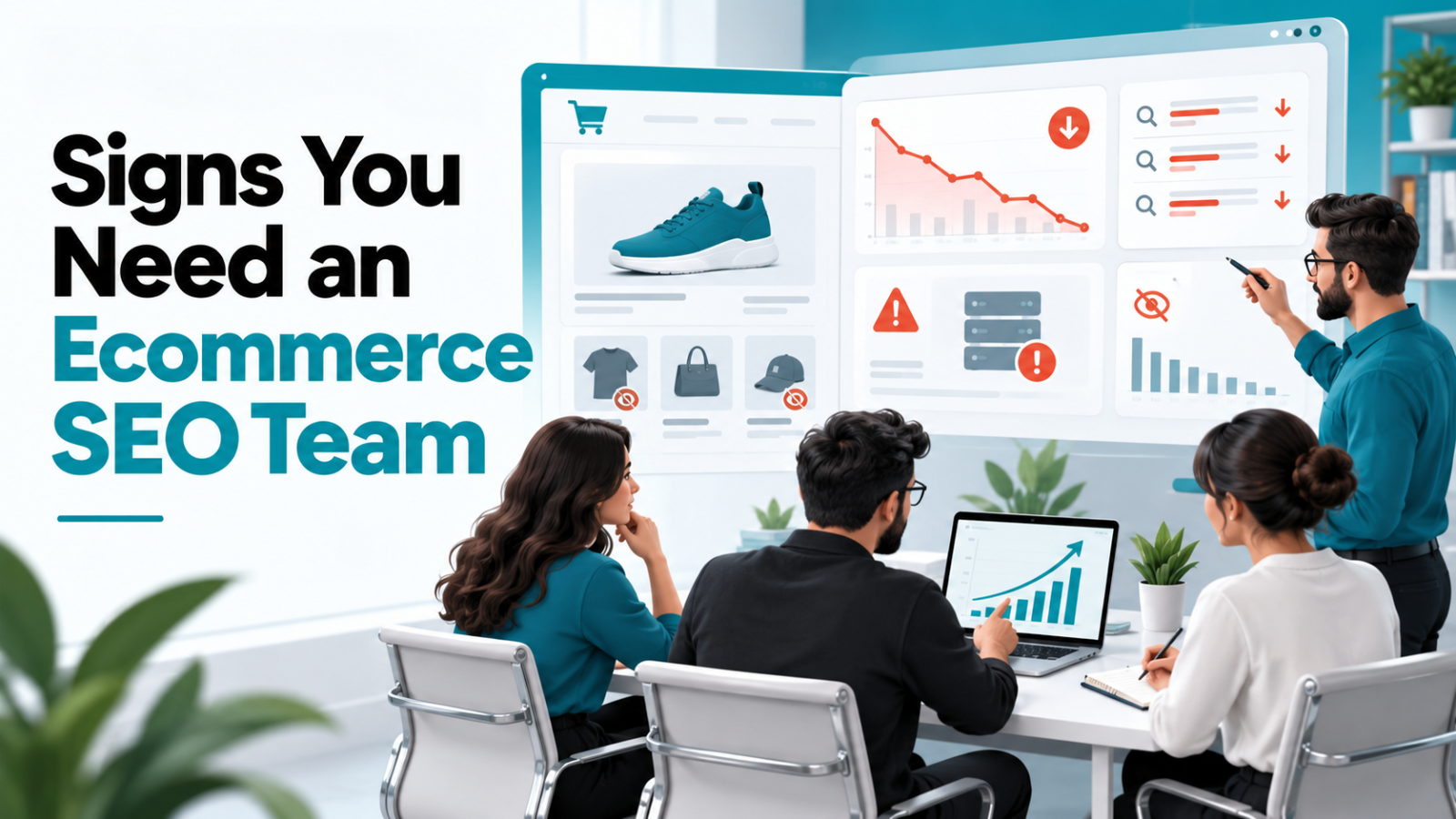
Running a store without traffic is like having a fancy shop in the middle of a desert. You might have products, perfect pictures, and prices that are way better than anyone else’s. If no one drives by, you’re not going to make a single sale. Your sales counter stays empty.
A lot of businesses think SEO is something they can handle later. They pour their energy into paid ads, social media, discounts, and new product drops. Meanwhile, their search engine visibility slowly fades away.
But here’s the reality: global e-commerce sales are now past $7.4 trillion. There are more than 28 million online stores fighting for attention. In this space, being invisible isn’t an option, it’s a risk. More than 44% of shoppers start their shopping trip by searching on Google or another search engine.
If your store doesn’t show up when they search, those shoppers will go to your competitors. Once they go, they might not come back.
That doesn’t mean you need to hire an SEO team. You can work with an SEO agency or a consultant who knows the ins and outs of online stores. They can find the spots in your site and create a plan that builds long-term steady traffic.
When should you actually make that move? When is the right time to invest in SEO?
Here are some clear signs that it’s time.
Signs Your Ecommerce Business Needs SEO Expertise
1. Your Organic Traffic Has Stopped Growing (or Taken a Nose Dive)
This is usually the fire alarm. Open Google Analytics, look at your organic channel traffic over the 6 to 12 months, and see a depressing flat line or worse, a steady drop.
Ecommerce is dynamic. Search engine algorithms shift customer search habits continuously. Competitors are constantly updating their catalog structures.
If eCommerce SEO traffic isn’t growing naturally alongside product inventory, your store is effectively losing ground. A specialized SEO team doesn’t just look at hit counts; they diagnose drops, recover lost keyword rankings, and build long term search equity.
2. Your Competitors Keep Ranking Above You
If you search the important product and category terms & competitors consistently appear above your store for searches with strong buying intent pay attention.
Ranking below competitors is not automatically a problem. If another store repeatedly outranks you for searches directly related to your products, they are potentially capturing customers before those customers ever see your website.
An ecommerce SEO strategy should look beyond keywords and examine:
- Which categories competitors are winning?
- Which products receive organic visibility?
- What content they have created?
- How their websites are structured?
- Where their authority comes from?
- What their pages offer that yours don’t?
The objective isn’t to copy competitors.
It is to understand the gap and build a strategy around your own business.
3. Your Products Aren’t Showing Up for Relevant Searches
You might have hundreds or thousands of products and still struggle to get them discovered through Google.
This can happen when product pages aren’t properly optimized, category pages lack content, internal linking is weak, or search engines aren’t clearly understanding the relationship between your products and categories.
This is where product page SEO and category page SEO become particularly important.
The goal isn’t to stuff keywords into product descriptions. It is to make each page genuinely useful while making its purpose clear to search engines.
4. You’re spending more on Paid Ads to Maintain Sales
Pay per click (PPC) ads on Google, Meta, or TikTok are great for spikes in sales. Relying exclusively on paid ads is a dangerous game. As ad costs (CAC) continue to climb every year, profit margins get squeezed tighter and tighter.
If turning off your paid ad campaigns means sales completely dry up overnight your business lacks a safety net. An ecommerce SEO team helps shift your customer acquisition strategy from “rented” traffic to “owned” traffic, driving sustainable high intent shoppers to your site without a fee for every click.
5. Your Product and Category Pages Aren’t Really Optimized
Do product descriptions come from the manufacturer’s supplier sheet? If so, you’re sharing the text with hundreds of other retailers online. Search engines hate content—they rarely index five identical pages, choosing instead to rank only the original or the most authoritative domain.
An ecommerce SEO team solves this nightmare by:
- Writing unique keyword optimized product copy that converts visitors into buyers.
- Managing complex URL parameters caused by product variations (size, color, material).
- Properly setting up tags so Google knows which version of a product page to rank.
6. Your Website Has SEO Problems
Sometimes the problem isn’t your products or content.
It is the website itself.
Ecommerce websites can become technically complicated as they grow. Filters, duplicate URLs, product variations, redirects, broken links, indexing problems, slow pages, and poor site architecture can all create SEO challenges.
The bigger the store becomes, the harder it can be to spot these issues manually.
Technical SEO helps search engines crawl, understand, and index your website properly.
It also affects customers.
Slow loading pages, confusing navigation, and difficult mobile experiences can make people leave before they ever reach checkout.
This is why SERP Shout’s approach is built around a principle: Good SEO = Good UX.
SEO shouldn’t just make a website easier for search engines to understand. It should make the website better for the people using it.
7. High Page Views, Low Sales: Your Traffic Doesn’t Convert
Getting traffic to your site is half the battle. If Ecommerce SEO visitors land on a page and bounce back to Google five seconds later, you have a match problem.
Not all traffic is created equal. Ranking for informational terms like “history of leather jackets” won’t drive sales the way targeted transactional keywords like “buy genuine brown leather bomber jacket” will. A specialized SEO team focuses heavily on search intent mapping, ensuring you attract shoppers who are actually holding a credit card in their hand, not just browsing.
This is why effective ecommerce SEO should look beyond rankings and traffic.
Metrics such as revenue, qualified traffic, product visibility, category performance and conversion opportunities provide a much clearer picture of whether SEO is contributing to business growth.
8. You Don’t Know What Your SEO Agency Is Actually Doing
This is a common problem.
You receive a report filled with:
- Keywords improved
- Backlinks acquired
- Pages optimized
- Articles published
- Technical tasks completed
But when you ask, “How did this help my business?” the answer isn’t clear.
SEO does involve activities. However, activities aren’t the same as outcomes.
You should be able to understand:
What was done → Why it was done → what changed → what happens next.
This is one of the reasons SERP Shout was created. The philosophy is straightforward: if an SEO recommendation doesn’t have a connection to business growth, it shouldn’t simply be included to make a monthly report look busy.
9. You Don’t Have the Time or Expertise to Manage SEO Internally
SEO requires consistency. It involves research, technical analysis, content planning, competitor research, optimization, and monitoring, testing, and ongoing adjustments.
Trying to handle all of that while also managing an ecommerce business can quickly become overwhelming.
Hiring an in house SEO specialist can be an option for some businesses.
For others, working with an ecommerce SEO consultant or specialized agency provides access to experience without building an entire internal team.
The right choice depends on budget, goals, website complexity, and the SEO work you need.
The important thing is to have someone who actually owns the SEO strategy rather than treating it as an occasional task.
If you’re exploring support, you can review SERP Shout’s ecommerce SEO services to see how a specialized team can support technical SEO, product visibility, content, and organic growth.
10. You’re looking for Long Term Growth, Not Quick Fixes
Perhaps the biggest sign is that you have reached a point where you want organic search to become a growth channel.
SEO isn’t usually a solution.
It requires understanding your market identifying opportunities improving the website creating content strengthening important pages and continuously learning from the results.
That’s also the kind of business SERP Shout is designed to work with.
The agency works with ecommerce stores across platforms such as Shopify and WooCommerce with clients across markets including the US, UK, Canada, Australia, India and the UAE.
That result isn’t a promise that every ecommerce business will see the outcome. It illustrates something important: SEO can have a meaningful commercial impact when the strategy is built around the specific problems and opportunities of a business.
In House SEO Team or Ecommerce SEO Agency?
Once you have identified these signs the next question is usually: Should you hire internally. Work with an agency?
Well, there is no direct answer.
An in house SEO professional may make sense if SEO is central to your business and you need someone working closely with your team every day.
An ecommerce SEO agency can make sense when you need specialized expertise across technical SEO, product and category optimization content strategy, analytics and ecommerce platforms without building a large internal team.
Whichever route you choose look for someone who understands e-commerce, not general SEO.
You can also explore SERP Shout’s SEO consulting services if you need direction before committing to a larger ongoing engagement.
Final Thoughts
SEO is easier to take when you stop seeing it as a list of tasks and instead see it as a way to grow.
If your organic traffic has stopped growing competitors are getting visibility your products are missing from relevant searches technical problems slow your site or you get traffic but not enough sales it may be time for dedicated ecommerce SEO help.
You do not necessarily need a SEO department.
You need the plan, the right expertise and a clear link between SEO work and business results.
For ecommerce businesses that want this approach SERP Shout offers specialized ecommerce SEO services focused on long term growth instead of numbers that don’t matter.
You can visit the SERP Shout to see its services read about the team, on the About Us page or look at its SEO consulting services if you need help picking the plan.
Because ultimately the goal of ecommerce SEO is not simply to rank. It is to help the right customers find you, and give them a site staying on.